
Direct to Film Printing
The Ultimate Guide to DTF Printing
Learn the workflow, equipment, benefits, and practical techniques behind vibrant, durable DTF transfers.
Your Complete Resource
Mastering DTF Printing
Direct to Film (DTF) printing is changing the world of textile customization. This technology offers versatility, efficiency, and excellent quality, making it a strong choice for established print shops, new businesses, and hobbyists.
Understanding DTF printing can open opportunities to create vibrant, durable, high-quality designs on many different fabrics. This guide explains what DTF is, how it works, its major benefits, the equipment you need, and best practices for reliable results.
01
What Is DTF Printing?
DTF stands for Direct to Film, a digital printing method that applies graphic designs to a clear PET film before transferring them to fabric. Unlike methods that print directly onto a substrate, DTF prepares the complete design on film first.
The printed film is transferred using heat and pressure, producing vibrant, detailed results. DTF is especially effective for complex artwork and provides excellent color fidelity and durability across many apparel and fabric products.
02
How Does DTF Printing Work?
DTF follows a multi-step printing, powdering, curing, and transfer workflow:
- Printing: The design is printed in reverse on clear PET film using specialized, typically water-based DTF inks.
- Powdering: Adhesive powder is applied evenly over the wet ink so the finished design can bond to fabric.
- Curing: Heat melts the powder and dries the ink, creating a transfer layer on the film.
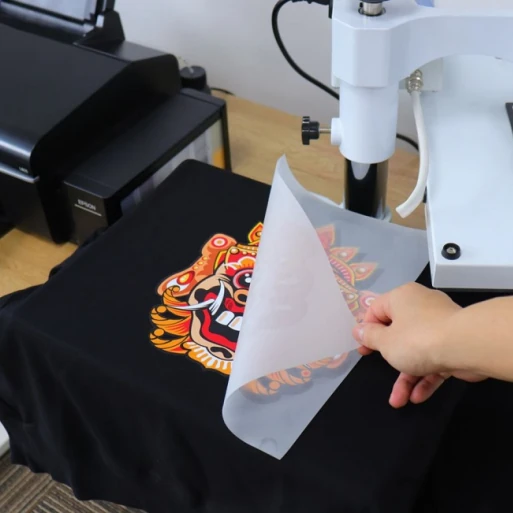
- Transferring: The cured film is positioned on the fabric and applied with heat and pressure from a heat press.
- Peeling: The carrier film is removed according to the film manufacturer's instructions, leaving the finished design on the fabric.
03
Benefits of DTF Printing
Versatility
DTF works with cotton, polyester, silk, blends, light fabrics, and dark fabrics, making it useful across a broad product line.
Quality and Durability
DTF can reproduce vibrant color and fine detail while providing prints that withstand repeated washing when properly produced and applied.
Cost Effectiveness
Lower setup requirements and the ability to prepare transfers in batches can make DTF economical for small and medium production runs.
Accessible Workflow
Once the equipment and settings are established, the repeatable process is approachable for new decorators and small businesses.
04
Equipment Needed for DTF Printing
A complete workflow requires compatible equipment and consumables designed to work together:
DTF Printer
A printer designed or properly configured to handle DTF inks and films.
DTF Inks
Water-based CMYK and white inks formulated specifically for Direct to Film printing.
PET Film
Coated carrier film designed to accept the printed design and release it during application.
Adhesive Powder
Hot-melt powder that bonds the printed ink layer securely to the fabric.
Heat Press
Consistent heat and pressure are essential for curing when applicable and applying the finished transfer.
Powdering Equipment
A shaker or powder applicator is optional for smaller shops but improves consistency and efficiency as production grows.
05
Best Practices for DTF Printing
- Prepare high-resolution artwork: Mirror the design before printing so text and graphics read correctly after transfer.
- Cure carefully: Under-curing can weaken adhesion and wash performance, while excessive heat can damage ink or film.
- Use the recommended settings: Follow the ink, film, powder, and garment manufacturer's instructions for temperature, time, pressure, and peel method.
- Test before production: Apply a sample transfer and evaluate color, adhesion, hand feel, stretching, and wash performance before committing to a full run.
06
Build More Possibilities with DTF
DTF printing is a versatile and cost-effective textile-decoration solution. Its ability to create vibrant, detailed designs on a wide range of fabrics makes it useful for shops that want to expand into custom fashion, merchandise, workwear, team apparel, and personalized gifts.
By selecting compatible equipment, mastering each stage of the process, and testing your production settings, you can use DTF to produce durable, highly customized textile products with dependable results.